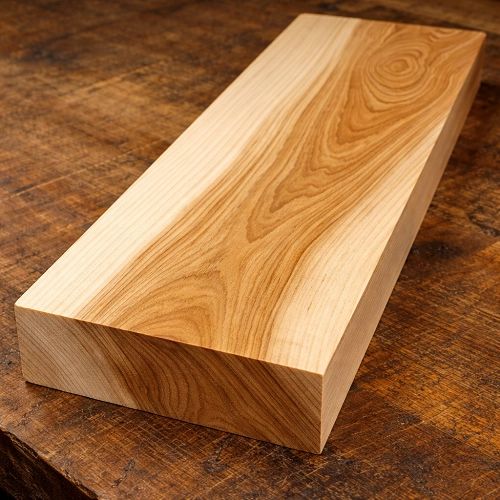
White Elm refers primarily to lumber derived from the American Elm (Ulmus americana), also called Grey Elm, Soft Elm, or Water Elm in some commercial contexts. It is a hardwood species prized for its distinctive grain, shock resistance, and attractive color range from pale sapwood to light reddish-brown heartwood. In solid wood boards and panels, this species offers a balance of mechanical performance and aesthetic appeal that appeals to furniture makers, designers, and craftsmen alike.
Elm belongs to the genus Ulmus, which includes many species across the Northern Hemisphere. In North America, Ulmus americana is often the most abundant and commercially used for “White Elm” lumber. Its sapwood is very light—nearly white—while the heartwood ranges from light to medium reddish-brown, giving boards a characterful but versatile palette.
Although elm is technically a hardwood (it comes from a deciduous tree), its mechanical properties place it on the lower end of hardness compared with many other hardwoods. On the Janka hardness scale, White Elm averages around 830 lbf (3,690 N) — softer than oak and maple but harder than many softwoods such as pine.
Overall, White Elm’s mechanical profile supports robust furniture and structural elements where shock resistance and bending are needed (e.g., chair seats, bent components), though it is less stiff than oak or hard maple.
White Elm’s grain is often interlocked or irregular, contributing to a coarse, textured surface and striking visual patterns when quarter-sawn or live-edged. This structural grain gives strength but can complicate machining.
The interlocked grain of Elm makes it prone to tear-out if tools are blunt or cuts too aggressive — a challenge for hand planing; power tools with sharp, high-angle cutters ease this issue.
Elm boards glue and finish well with common adhesives (PVA, MUF) and finishes (oil, lacquer). The open pore structure benefits stain penetration but may accentuate grain variance; using sealers or dyes helps achieve even coloration.
Raw Elm can move in response to moisture changes more than many hardwoods. Proper kiln drying to ~6–8% moisture and mindful workshop acclimation help keep boards flat and stable. Lamination (splicing multiple boards) also mitigates twisting in larger panels.
Because of its excellent bending and shock resistance, Elm has historical and practical use in items like tool handles, hockey sticks, and bendy furniture frames.
Elm is harder and stronger than most softwoods (like pine and cedar), making it suitable where structural integrity matters.
The American Elm faced drastic reductions due to Dutch Elm Disease, reducing large timber availability. However, selective harvesting, disease-resistant cultivars, and sustainable forestry practices improve long-term access. The splicing process for boards also maximizes yield from smaller logs and offcuts, supporting efficient resource use.
White Elm hardwood boards represent a unique crossroads of aesthetic appeal, good mechanical performance, and craftsman versatility. While softer and less stable than traditional hardwoods like oak or maple, Elm’s shock resistance, dramatic grain, and workable nature under the right conditions make it a compelling choice for furniture, decorative panels, and bespoke woodworking projects. With proper kiln drying, tool preparation, and design judgment, Elm can be a standout material in both utility and fine woodworking.